People of the Brush Industry: Tradition Meets Technology
Behind every brush are decades of knowledge, mechanical intuition and steady adaptation. Industry leaders share how legacy, leadership and technology are intersecting on today’s shop floors.
By Amy Linzmeyer-Jelinek
The brush industry is shaped by an enduring combination of heritage and innovation. Success requires workers with physical dexterity and technical aptitude, as well as leaders with a deep respect for the roots of the industry paired with an innovative mindset and willingness to invest in new technologies. Every day, we work alongside people who have spent their lives in this industry. Paul Winzig, owner of Young & Swartz, is one of those people.
Built to Last: A 160-Year Legacy
Young & Swartz is one of the oldest brush companies still operating in the United States, celebrating their 160th anniversary this year. Family-owned and proudly independent, the company has seen decades of change and has maintained a focus on short-run, specialty staple-set brushes made with intentional expertise and careful attention to application.
“I love the application of what brushes do,” Winzig says. “They sort, push product, clean, stabilize, used in the medical profession … used to reduce static, clean a solar panel. The importance of what brushes do every day; it should be respected.”

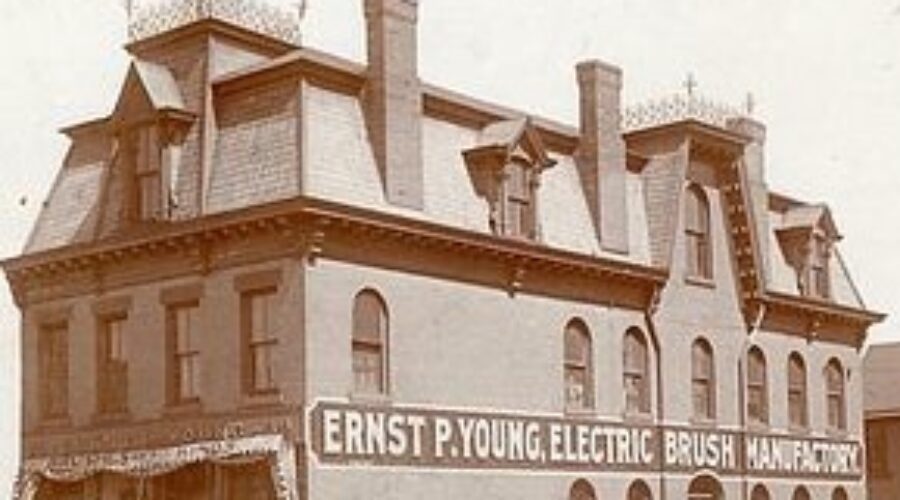
Winzig entered the brush business in 1977, and he has a unique perspective on the industry over nearly five decades. The business has been operating out of the same building since 1866, when it was first incorporated by Ernst Young and Ben Swartz.
As technology advanced, Young & Swartz modernized, but there are still remnants of history throughout the building. Alongside newly installed, bright, energy-efficient LED lights hang the original gas lamps, which are gentle reminders of how long this work has been going on and how many eras the facility has seen. If you look through the records, you’ll find the company proudly labelled “Ernst P. Young, Electric Brush Manufactory,” not because they made electric brushes, but because they were one of the first to be hooked up to the electric grid in the area.
Young & Swartz has also upgraded to advanced manufacturing equipment over the years. Paul’s shop includes cutting-edge machinery, including modern four-axis machines capable of precision work that earlier generations could not have imagined.
Winzig is quick to emphasize that technology has not replaced the need for foundational mechanical skill. Despite automation and CNC advances, the work still depends on people who understand how things are made, how tools behave, how adjustments matter and how solutions are built in real time. He still needs workers who can machine tools and operate a mill and lathe.
When asked what’s changed outside of just technological advancements, Winzig easily replies, “I’ve noticed there are more women in the brush industry since I started.” He goes on to note that he sees this as deeply positive.
A Changing Workforce — and New Leadership Paths
Erin Clay, Engineering and Quality Manager at Schaefer Brush, is one of those women. Clay joined the engineering team at Schaefer Brush shortly following the acquisition of E. Gornell & Sons in 2019, right before the global pandemic hit, and mentions that the timing of her onboarding influenced what she first learned about in the brush manufacturing industry.
The shift in demand caused by the urgency of the pandemic emphasized just a narrow slice of what brushes are used for throughout the industry. “There was so much focus in the early days of COVID-19 on more straightforward cleaning applications that I didn’t learn about other niche applications until later.” Now, her breadth of knowledge is extensive.

Schaefer Brush was established in 1905, and in 2018 bought E. Gornell & Sons, which was established in 1892. It’s been my personal privilege since joining the team to try to preserve, collect and honor both companies’ history. When I helped pack up the Chicago facility in the summer of 2024, I felt the weight of what that space represented while carefully going through boxes that had been stored for decades and sifting through samples, photos and correspondence from decades before I was even born.
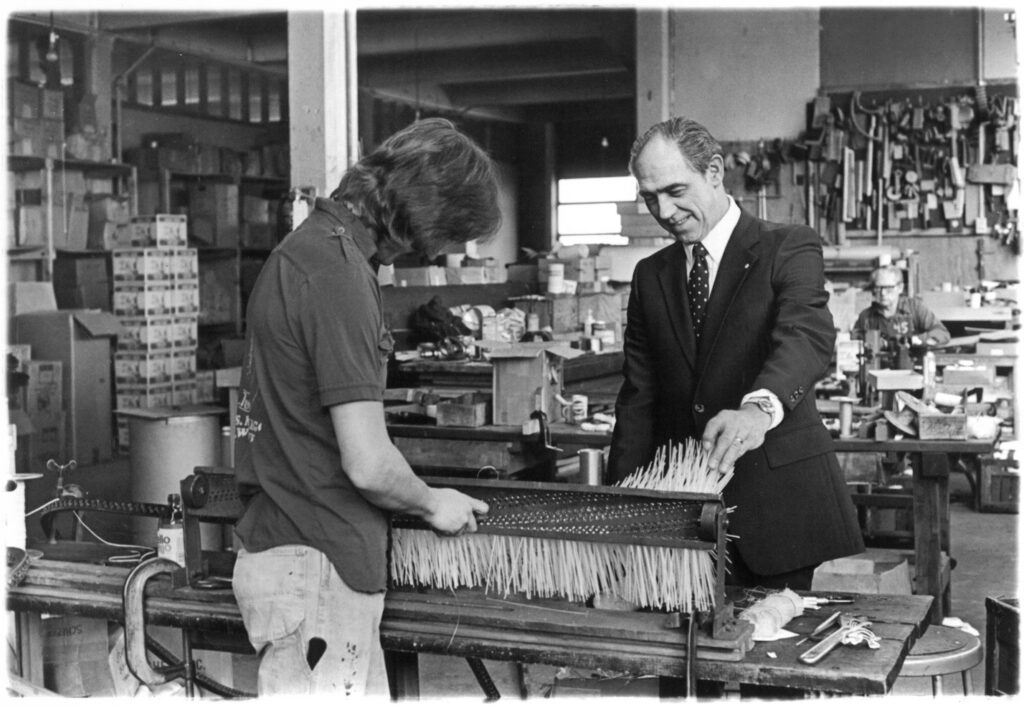
Clay was also deeply involved in the final phase of Schaefer’s acquisition of E. Gornell & Sons and the major transition of assets from Chicago to Waukesha in 2024. While complex, she describes the experience with a sense of momentum and pride. “There were a lot of moving parts, but the transition was very exciting,” she says. For Clay, the focus throughout was on stewardship. “E. Gornell & Sons has a history of excellence and quality we focused on preserving during and after the physical move to Waukesha.”
Looking more broadly at the industry, she sees many of the same workforce and cultural shifts as other sectors. As automation becomes more integrated into production, the skill sets required continue to evolve. “As we lean further into automation, skills needs change,” she notes, pointing to the importance of advanced technical and computer knowledge for operators and ongoing internal training to improve compliance.
When she looks ahead, Clay is optimistic. “The brushmaking industry doesn’t seem content to coast along,” she reflects. She sees leaders throughout the industry who are committed to continuous improvement and increased automation, paired with a commitment to quality and legacy.
Engineering as Competitive Strategy
Gonzalo Martinez, President and CEO at Schaefer Brush, is one of those leaders. For Martinez, engineering is the foundation of competitiveness and continuity in the domestic brushmaking industry. “Engineering is how we keep brush manufacturing strong in the U.S.,” he explains. In his view, engineering is what turns application requirements into repeatable performance through material science, process control and disciplined execution. It enables innovation, allowing manufacturers to deliver value-added solutions and better products to customers whose operations depend on consistency.
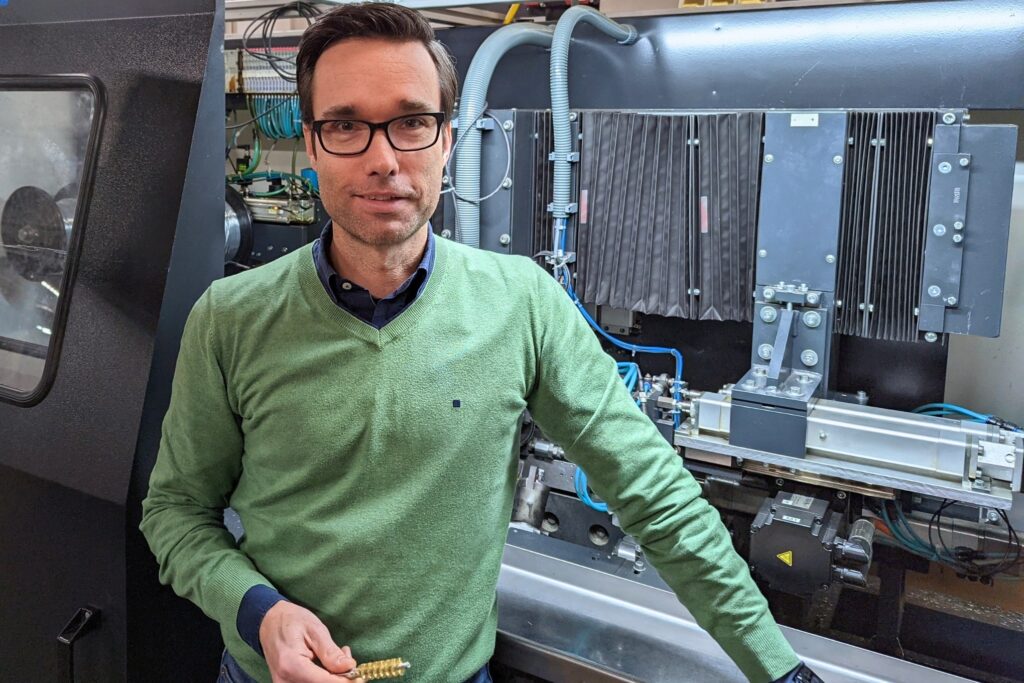
While brushmaking remains a craft, Martinez sees the last decade as marked by a major change: “Moving from tribal knowledge to AI and data-driven process control.” He describes how production signals can now be used to forecast constraints, standardize best settings and continuously improve performance run after run.
That discipline shows up in both quality and speed. Martinez notes that when engineering removes variation and stabilizes a process, manufacturers simultaneously gain productivity, predictability and higher quality product.
Modernization, however, does not mean losing what makes brushmaking special. Martinez believes application understanding is critical and uniquely human, while automation and improved processes will provide the structure to make outcomes scalable and repeatable. Even with advanced equipment, he emphasizes that certain parts of brushmaking remain deeply dependent on experience: selecting the right filament, density, trim and edge condition and knowing what to adjust when conditions shift. Brush design, he notes, is more complex than most outsiders assume because performance is the result of multiple interacting systems. In many applications, small changes can make a big impact on effectiveness.
For the next generation of talent, Gonzalo believes the most important traits will be curiosity, discipline, mechanical intuition and a continuous-improvement mindset grounded equally in data and the shop floor.
A Tradition Worth Building a Future On
The stories of Young & Swartz, E. Gornell & Sons and Schaefer Brush all reflect something broader about the brush industry: longevity is built through adaptation, without losing identity. Clay acknowledges the importance of preserving the industry’s deep historical roots and technical diversity. “So many brush companies have extensive histories,” she says, “and understanding those stories matters, particularly in niche applications.”
A shop can install LED lighting and still honor the gas lamps. A company can operate four-axis machines and still rely on workers who know how to run a mill. A manufacturer can remain family-owned across generations and still serve modern markets.
Brushmaking is not simply about products. It is about application, purpose and craft. It’s about creating tools that quietly enable the world around us to function. It is also, as Winzig reminds us, something deserving of respect. “The general public fails to realize what a unique thing a brush is,” he says. “My dad used to say to people, ‘You use a brush every single day and you don’t even realize it.’”
Perhaps that is the greatest testament to the industry: brushes are so integrated into life and work that they can be taken for granted.
Ten Years Ahead, Same Essential Work
It’s natural to wonder what the brush industry will become. With pressures from imports, automation, workforce shortages and changing customer demands, many manufacturers are trying to anticipate what the next decade will bring. Martinez predicts the next decade will be shaped by AI-enabled production intelligence, smarter automation, faster prototyping, deeper materials and application engineering, but that doesn’t replace the need for people. “Automation should eliminate variation and unsafe, risky work,” he says. “People should own judgment and problem-solving; the best results come when automation supports skilled operators, not replaces them.”
The partnership between technology and craftsmanship has defined brushmaking for generations, and we hope it will continue to be this way into the future. Winzig is optimistic that brushmaking will retain the uniqueness that has allowed it to endure throughout the decades. Qualities like adaptability, talent, pride in the work and respect for the craft. Processes will change, and markets will shift, but the character of the industry matters just as much as the machinery on the floor. There will always be a need for capable people and human hands. As Winzig put it more plainly in our conversation, even amid change, “Someone’s got to pick up the horsehair and put it in the stock box.”
That thinking echoes statements from past leaders as well. In an article from 1980, I found the words of Jim Schaefer, one of the late leaders of Schaefer Brush: “All we have to do is use a little common sense and keep doing the things with the type of integrity we have, and we shouldn’t have any problem.”
Even with automation, robotics and AI tools becoming more prominent, brushmaking remains grounded in a physical reality. The industry will continue because the need continues. Brushes will still clean, stabilize, finish and solve problems. And someone will still have to load the stock box.
About the Author
Amy Linzmeyer-Jelinek leads Sales & Marketing at Schaefer Brush Manufacturing, a U.S. brushmaker with more than 120 years of experience in industrial brush solutions. Her work focuses on industry collaboration, product development, strengthening customer relationships and supporting and preserving the legacy and growth of brushmaking in the United States. Learn more about Schaefer Brush at www.schaeferbrush.com.