U.S. Small Business Optimism Falls In March
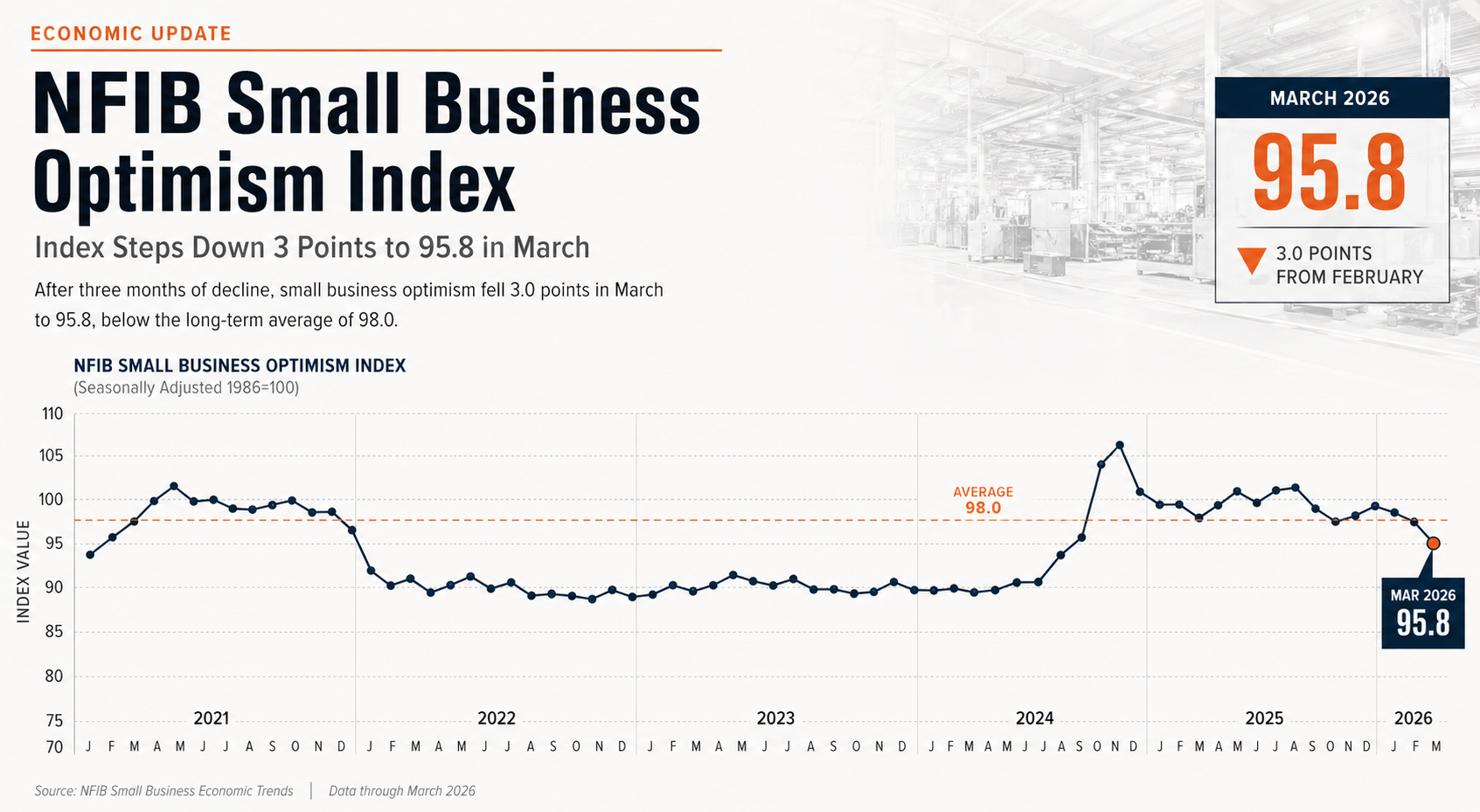
NFIB Index Drops to 95.8 as Uncertainty and Cost Pressures Mount
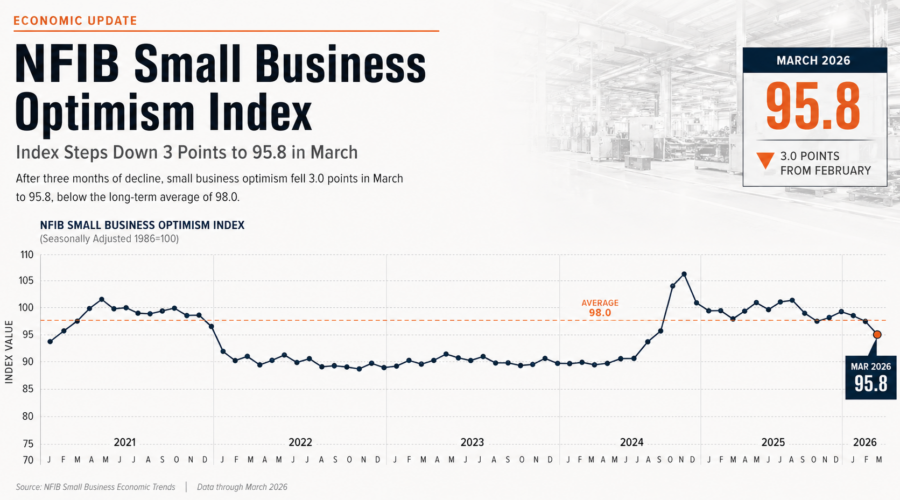
The National Federation of Independent Business (NFIB) Small Business Optimism Index declined three points to 95.8 in March, slipping below its long-term average of 98.0 and signaling a more cautious outlook among U.S. small businesses. The March reading marks the lowest level in nearly a year and reflects growing concern across key areas, including profitability, future business conditions and operating costs—factors that are closely tied to activity across the brush, broom and industrial cleaning supply chain.
Confidence Weakens as Uncertainty Climbs
A key feature of the latest report was a sharp rise in the NFIB Uncertainty Index, which climbed to 92—well above historical norms. The increase underscores a shift in sentiment as business owners weigh ongoing economic volatility, policy questions and persistent cost pressures. Expectations for improved business conditions deteriorated in March, while more owners reported declining profit trends. Hiring plans also softened, suggesting a more conservative approach to expansion in the near term.
Cost Pressures Continue to Squeeze Margins
Inflation remains a central concern for small businesses, with energy and input costs continuing to impact margins. For manufacturers and suppliers tied to the brush industry, these pressures are particularly relevant, as material costs, transportation expenses and labor availability all influence pricing and production decisions. While pricing power has helped offset some of these increases, the report indicates that fewer businesses expect conditions to improve in the months ahead—raising the likelihood of tighter operating strategies.
Implications for the Brush Industry
For brush manufacturers and their supply partners, the decline in small business optimism reinforces a broader trend of caution that has been building across the industrial sector. Distributors and end users — many of whom fall within the small business category — may moderate purchasing activity, delay equipment upgrades or seek more cost-effective sourcing options. At the same time, suppliers that can offer reliability, efficiency gains or pricing stability may find opportunities to strengthen relationships in a more selective market.
The latest NFIB data aligns with the ongoing theme of economic uncertainty shaping decision-making across the industry. As has been evident since the pandemic-era disruptions, periods of hesitation can also create openings for suppliers positioned to respond quickly to shifting customer needs.