Borghi Expands Its Voice in North America Through Davide Ori
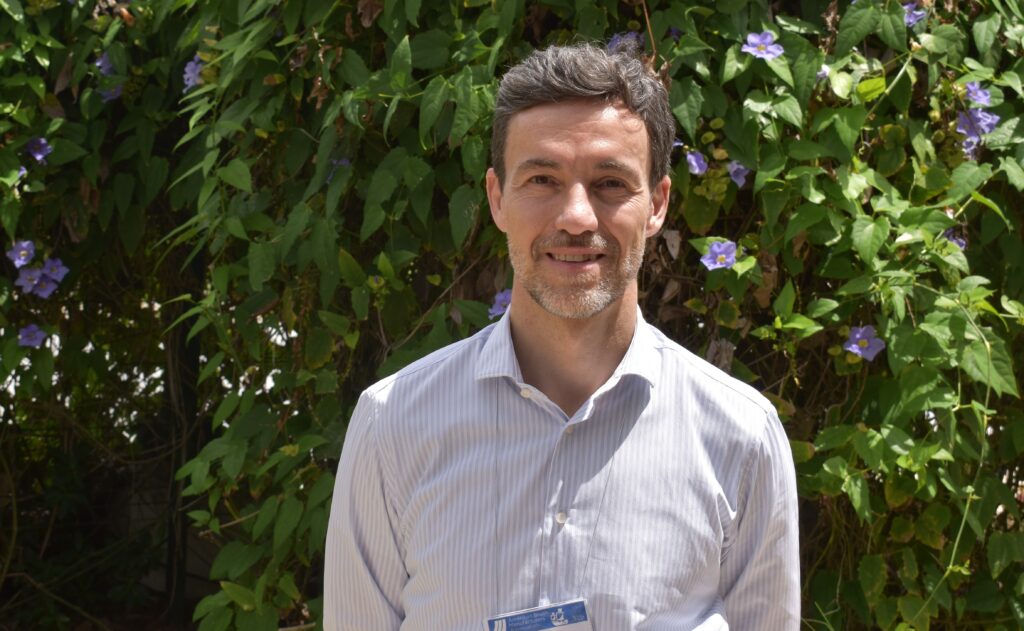
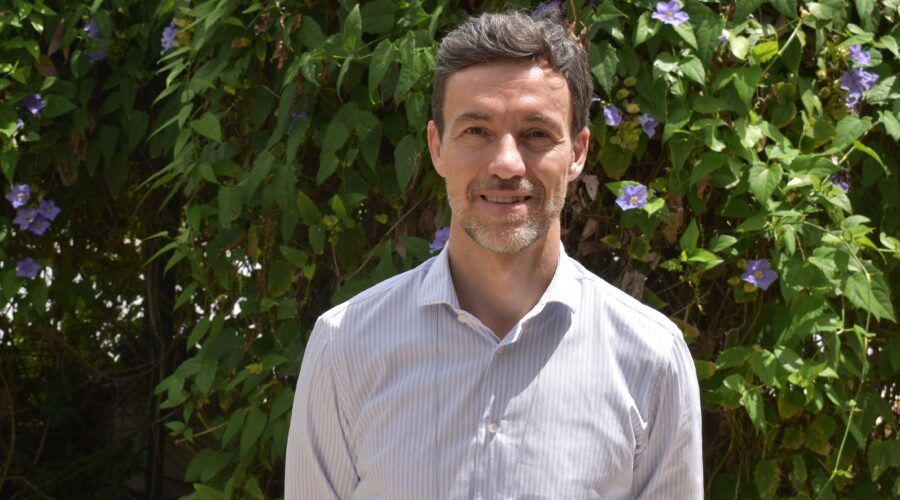
Getting to know Davide Ori, Area Manager for Borghi S.p.A., providing a relationship-driven approach to global machinery markets.
At the ABMA 2026 Convention, Brushware magazine sat down with Davide Ori, area manager for the USA, Canada, and Poland at Borghi S.p.A., alongside Carlos Petzold, President of Borghi USA, to discuss Davide’s history with Borghi and the integration of Unimac into the Borghi brand, evolving automation trends and how Borghi is strengthening its connection to customers
in the U.S. and Canada.
Can you tell us a little bit about your role with Borghi today?
Davide Ori: I’m based at the Borghi s.p.a. headquarters in Castelfranco Emilia, Italy, working with Borghi as area manager for the U.S., Canada, Poland and nearby countries.
Borghi and Unimac have had a long-standing relationship. Can you give us a picture of how the organization has been integrated?
Ori: The Unimac entity no longer exists as a separate company, but the technology is very much alive within Borghi. All of the machines related to power brushes and metal handle lines are now manufactured under the Borghi name, using Unimac technology and continuing to improve it.
Carlos Petzold: The decision was really about consolidation. Borghi and Unimac had overlapping departments — engineering, purchasing, logistics — and it made sense to bring everything under one structure. The benefit is that all Unimac employees transitioned into Borghi, so the knowledge and experience were fully retained.
Davide, take us back a little bit. How did you get started in the industry?
Ori: I started in 1999 with Tecno-Plastic, a Borghi company focused on extrusion lines for monofilament (synthetic brush fibers). I began at a very basic level, working on electrical connections for the machines. Over time, I grew with the company and eventually became President. After we sold TechnoPlastic to a German company in 2014, I stayed on as sales manager. Then, in 2019, when Borghi acquired 100 percent of Unimac, I moved into the role of General Manager at Unimac. After Unimac was fully incorporated into Borghi in 2024, I took on my current role as Borghi Area Manager covering the United States, Canada and Poland.
Can you tell our readers more about the focus of your new role?
Ori: My main commitment is to support Borghi’s presence in the USA and Canada as effectively as possible. I aim to be a true point of contact between the U.S. and Italy to ensure we are aligned, responsive and efficient every day to support our customers in the areas of my responsibility.
Petzold: The key is that Davide represents the voice of the USA and Canadian customers inside Borghi. Because of time zones and distance, it’s critical that customer needs are clearly communicated back to Italy. Every region has different requirements, and Borghi organizes its global strategy through area managers like Davide to ensure those voices are heard.
Can you tell us about new or recent innovations from Borghi?
Ori: We continue to develop new machines. Recently, we introduced a new power brush knotting machine, and we’re also working on a new twisted-in-wire machine that will be released soon. Since incorporating the Unimac lines of machinery into Borghi’s engineering department, a process of renovation of that range of equipment has been started. All the former Unimac machines are now being redesigned using the Borghi concept of interchangeability and modularity, as well as short index times for increased productivity.
Petzold: We’ve also seen tremendous success with the “Moon” machine — Borghi’s fully automatic staple-set platform. Borghi has sold more than 20 units globally in a short time. Its success comes from its reliability, flexibility and highly productive output.
Can you expand on the importance of flexibility for brush manufacturing?
Petzold: Historically, automation limited versatility. Now, with modular design, a machine like the Moon can handle a wide range of brush types, like cylindrical, flat, and semi-spherical, without excessive cost or changeover time. It can also operate in hybrid modes: fully automated for high-volume runs or manually loaded for smaller production. That balance is what’s driving adoption. Another key example of flexibility is that Borghi has been integrating finishing directly into the machinery. The Gemini machine model can produce large cylindrical or flat brushes and complete trimming within the same system. Historically, that required multiple steps and machines. Now, the product comes off the machine nearly finished, reducing handling, labor, and cost.
Ori: Today, automation is essential, but it must come with flexibility.
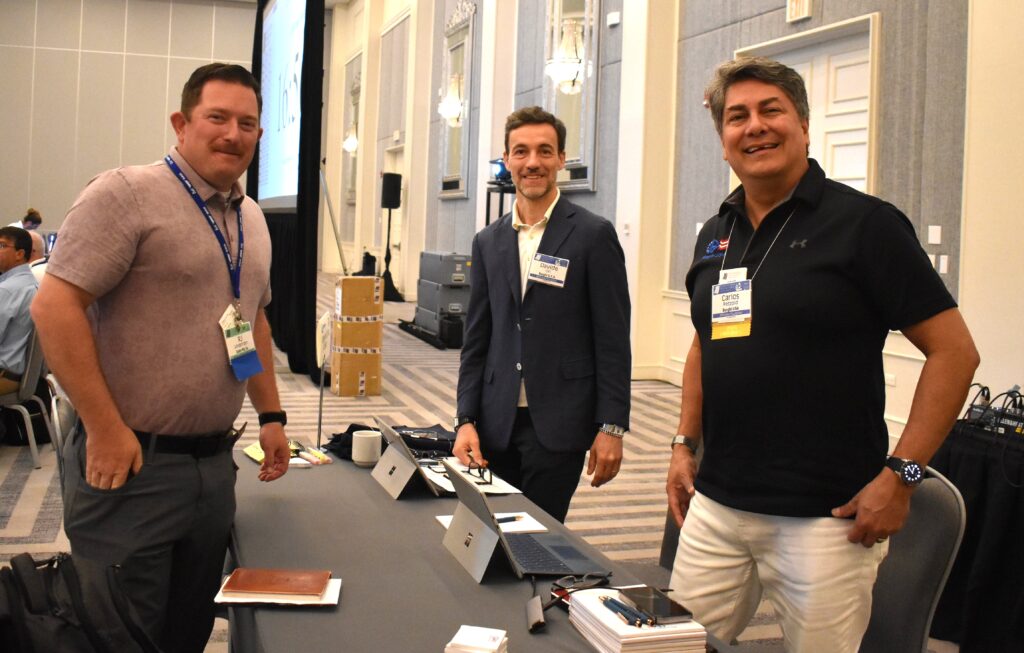
Face 2 Face session at the 2026 ABMA Convention in Puerto Rico.
Is the demand for manufacturing automation in North America the same as in other parts of the world for the brush industry?
Ori: Yes, absolutely. Labor challenges are global, and automation demand is
increasing everywhere.
Petzold: Again, the difference now is that automation no longer sacrifices versatility. Machines like Stargate and Moon allow manufacturers to scale production while still handling diverse products that can be manufactured on the same machine.
How is artificial intelligence factoring into the equation for Borghi?
Ori: For us, AI will primarily improve internal processes — streamlining operations, purchasing and service systems.
Petzold: Machine design still comes from direct customer interaction. AI can support efficiency, but innovation in our industry comes from understanding real-world needs.
We also must be careful. AI can introduce errors quickly if not applied properly. In our business, where machines are highly specialized and produced in small volumes, precision matters.
Davide, what do you enjoy most about working in the brush industry?
Ori: The people. Building relationships and learning from others has helped me grow over more than 25 years.
As a company leader, do you have any advice for younger professionals looking to build careers in the machinery or brush sectors?
Ori: You have to “roll up your sleeves.” I started from a very basic technical role and worked my way up. If you are willing to push yourself and commit fully, you can reach your goals.
Along those lines, how are you approaching workforce challenges?
Ori: It is difficult today to find people who are willing to put effort into manufacturing roles. Borghi is continuously cooperating with technical schools as well as Universities to attract young students to consider working in our field. This cooperation gives Borghi the opportunity to work with these students as they are studying and seeing the potential for a job in the technology sector. Borghi has hired many new employees through
this program.
Petzold: Manufacturing is not always seen as an attractive career path for younger generations. However, I have had opportunities to meet with some of the young students during visits to Borghi and I encourage them that it is an excellent career path if they enjoy what they experience at Borghi during their internships.
Ori: But when you find the right people, you must take care of them. Borghi always takes care of their people.
Looking ahead, what excites you about working in the industry?
Ori: Continuing to help customers grow. Understanding their challenges, their goals, and working together to find solutions—that’s what drives me.
Petzold: That collaboration is what fuels innovation. When customers share their needs, it gives us the foundation to develop new solutions.
Can you tell us about life outside of work? What do you enjoy when you are out of the office?
Ori: Spending time with my family. I have a wonderful wife and lovely twin daughters. We enjoy skiing, hiking, snorkeling and just spending time together.
Is there something people might not know about you?
Ori: I try to be clear and direct, and very open and transparent. What you see is what you get. I care that my words have important value, so I work in this way.
Petzold: He’s also very involved in his community. During the severe flooding that took place in the Castelfranco Emilia region in 2023, he volunteered extensively to help people recover.
Ori: I try to always be present—for my family, for friends, and for business partners. People who know me know they can always count on me. It is my hope to travel throughout the USA and Canada to meet the people of the industry and make more connections and friends.
Learn more about Borghi at www.borghi.com.
Information in this article has been updated to indicate the accurate number of 20 Moon units sold to date. This article originally appeared in the May/June issue of Brushware magazine.