Precision Brush Company 1951 to 2026: 75th Anniversary
Three Generations of Ingenuity, Custom Manufacturing and Growth
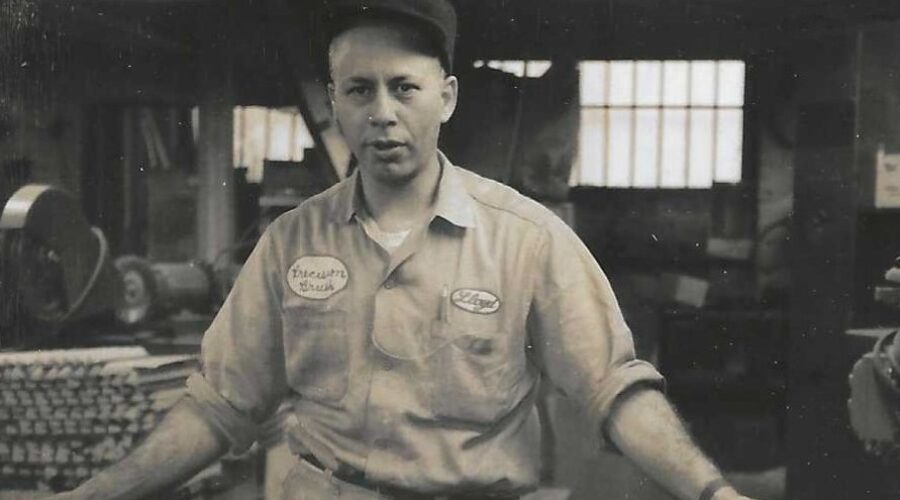
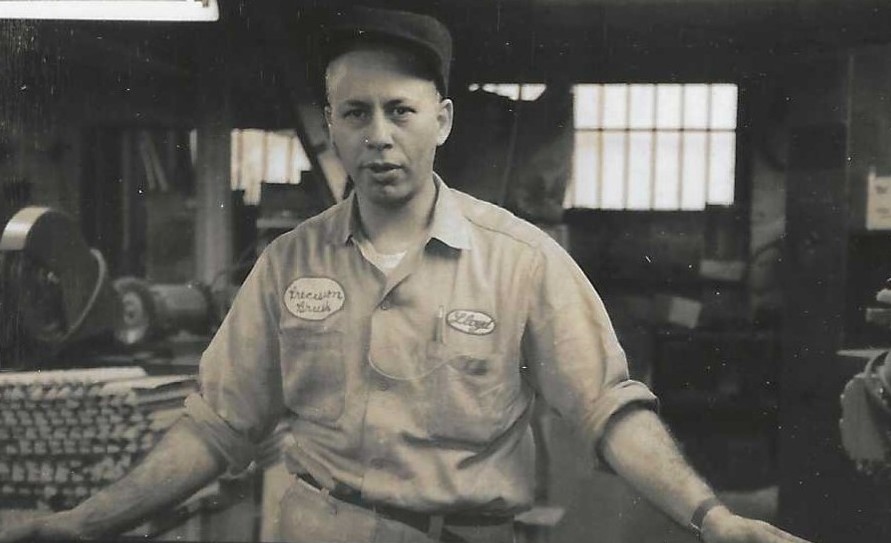
Precision Brush Company was founded in 1951 by Lloyd Benjamin in Cleveland, Ohio. Before starting the company, Lloyd worked for Superior Brush Company, which primarily manufactured vacuum cleaner brushes. While there, he designed brush-making equipment and worked in the factory. He began noticing customer inquiries for custom brush products that Superior Brush was not particularly interested in pursuing.
Lloyd saw an opportunity. Starting with very little money but hard work and determination, he founded Precision Brush Company and began to design and build machinery to manufacture metal channel strip brushes. He cobbled together parts and components wherever he could find them and ultimately succeeded in building his first strip-brush machine. Over the years, Lloyd built several more machines, establishing both the manufacturing capability and entrepreneurial philosophy that would define Precision Brush for decades to come.
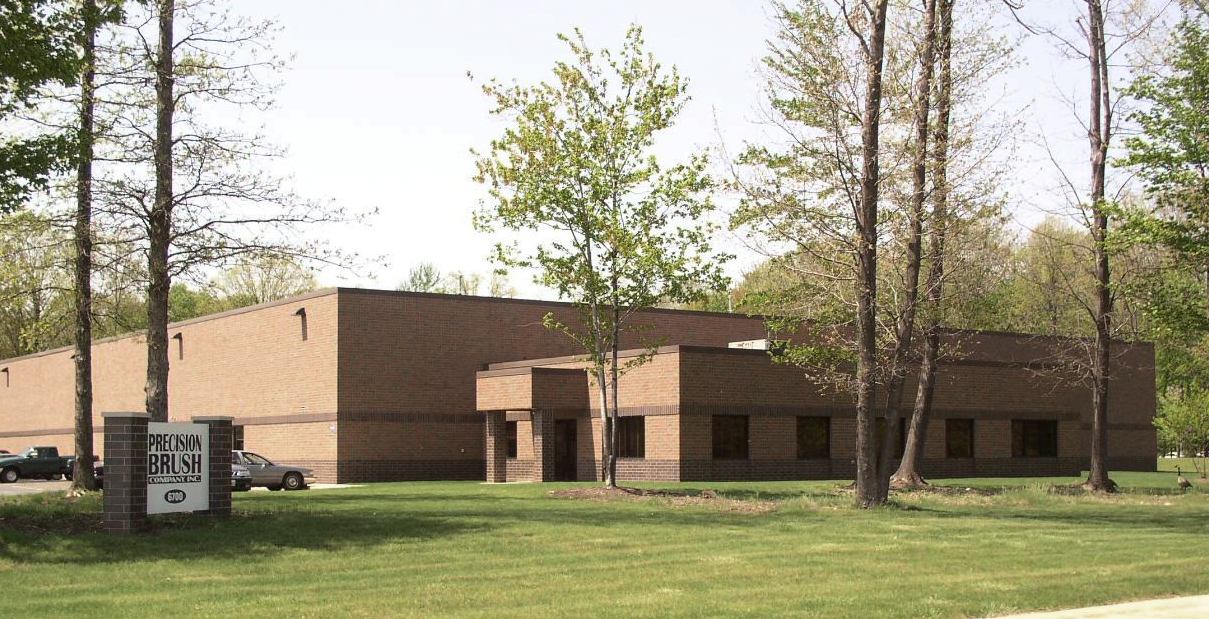
By the early 1960s, the company had grown enough to move into a new, approximately 5,000-square-foot factory in Maple Heights, Ohio. Lloyd’s original idea — serving customers who needed custom products and smaller production runs — became the foundation of the company. Seventy-five years later, that philosophy remains at the heart of Precision Brush.
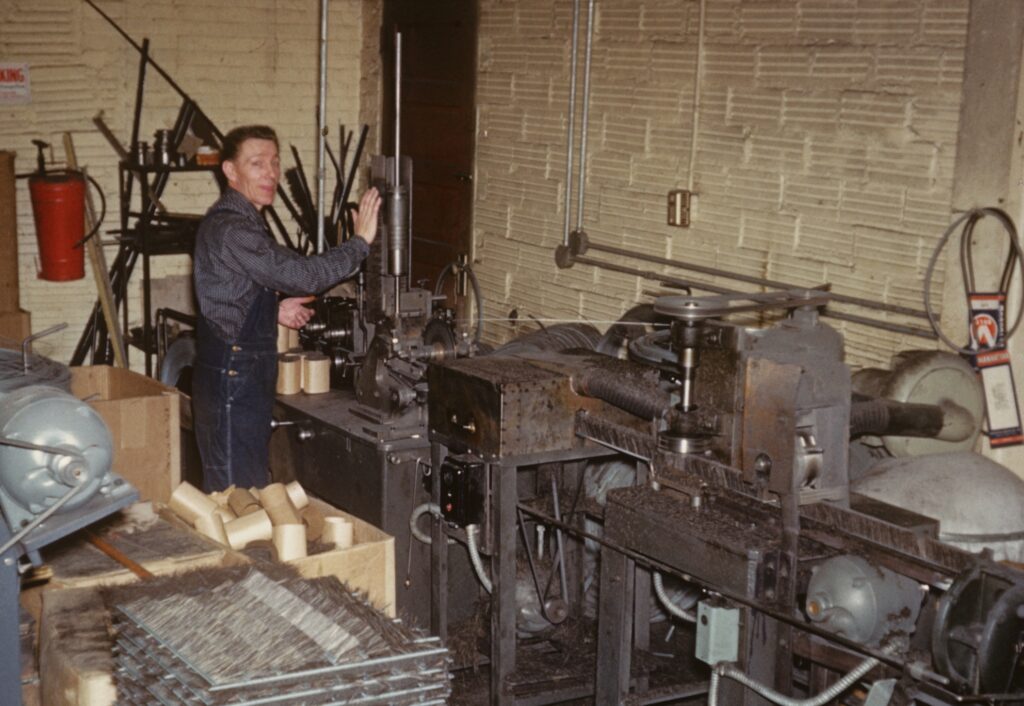
Jim Benjamin, Lloyd’s son, was born in 1965 and essentially grew up around Precision Brush. He frequently went to the factory with his father on weekends, watching and helping as Lloyd made brushes, organized the plant and handled paperwork in the office. Jim’s uncle, Ken Benjamin, was also involved in the business and was in charge of sales and running the office. Through high school and college, Jim continued working at Precision Brush during summers and on weekends. After earning a business degree, he joined the company full time in 1987. “It was an amazing opportunity right out of school,” Jim says.
At the time, Lloyd was getting older and had begun to consider selling the business. Jim expressed an interest in Precision Brush, and father and son decided instead to work together. Jim quickly discovered that running the company required much more than the business education he had received in college. There was an enormous amount of engineering knowledge to learn, particularly because much of Precision Brush’s machinery had been designed and built by Lloyd himself. The machines had no blueprints, and one machine would be considerably different from the next. Computers had not yet entered the company’s operations either.
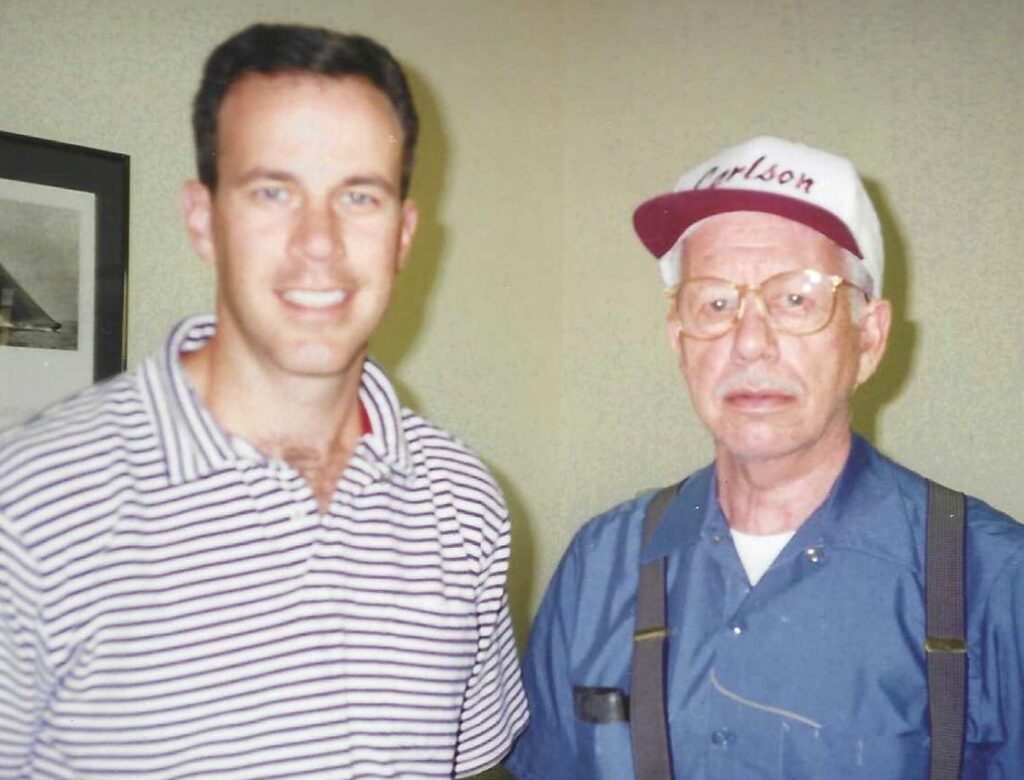
One of Jim’s early challenges became bringing more organization and technology into the business — computerizing the office, documenting and organizing machinery and spare parts and gradually creating more formal processes throughout the company.
Working alongside his father also taught Jim a great deal about the challenges and rewards of operating a multigenerational family company. Lloyd had suffered a motorcycle/moped accident as a young teenager that damaged his hearing, which continued to deteriorate over the decades. Communication between father and son could sometimes be challenging. Despite those challenges, the two successfully transitioned Precision Brush from the entrepreneurial operation Lloyd had created into a larger and more structured manufacturing company.
One of Jim’s proudest accomplishments was taking his father’s original vision, satisfying customers who needed custom and smaller-run brush products and building a more sophisticated manufacturing organization around it. Under Jim’s leadership, Precision Brush expanded its facilities in 1998, added manufacturing capacity and machinery, improved processes and developed a larger office staff along with stronger sales and customer-relations capabilities. At the same time, the company has remained particularly focused on its core expertise: metal channel strip brushes.
Over many years, Precision Brush has steadily increased its manufacturing capacity and broadened the range of products it can produce. Today, one of the company’s distinguishing capabilities is the breadth of its metal channel strip-brush manufacturing. Precision Brush manufactures strip brushes in channel sizes ranging from No. 2 through No. 10, giving the company a wider range of metal channel sizes than almost any other strip-brush manufacturer. That manufacturing flexibility supports another hallmark of the business: an extraordinarily diverse customer base.
Strip brushes may appear to be a specialized industrial product, but their applications reach virtually every industry. Precision Brush products are used in agriculture, food processing, conveyor cleaning, dust control, industrial machinery, weather seals, door seals, raised floor grommets, wire grommets, data centers, pharmaceutical applications, cable management, pest control seals, wire-harness management and vacuum cleaner brushes, among many, many other applications.
That diversity is, in a number of ways, a continuation of the opportunity Lloyd Benjamin recognized in 1951: customers frequently need specialized products and solutions that don’t fit neatly into high-volume, standardized manufacturing. Precision Brush has successfully designed countless brushes from concept to creation according to the needs of their customers.
Reflecting on 75 Years
For Jim, reaching Precision Brush’s 75th anniversary is difficult to fully comprehend. “It’s hard to believe it’s been 75 years since my father started the company,” he says. “There have been a lot of changes in the industry and a lot of changes in the company. It’s also amazing to realize that I’ve been here myself since 1987.”
The milestone represents more than simply the longevity of the company. It demonstrates the durability of Lloyd Benjamin’s original idea: listen to customers, solve unusual problems and manufacture products other companies may not be interested in making. The tools and technologies have changed dramatically since Lloyd cobbled together that first strip-brush machine in a small Cleveland machine shop, but the underlying philosophy has remained remarkably consistent.
For Jim, one of the most rewarding parts of the company’s 75-year history has been taking that entrepreneurial foundation and building upon it, creating a larger operation with more machinery, better processes, greater capacity and stronger systems while retaining the flexibility of a family-owned manufacturer. Now, another major transition is approaching.
The Third Generation
The next chapter of Precision Brush begins in September 2026, when Jim’s son, Peter Benjamin, is scheduled to join the company, representing the third generation of the Benjamin family in the business. Peter studied mechanical engineering at the University of Vermont, giving him a skill set particularly well suited to the manufacturing side of Precision Brush. Jim describes his son as hardworking, artistic, and creative, and believes Peter will be able to look at the company through several new lenses: as a young person, as a mechanical engineer and as someone who has grown up with 75 years of family brush-making history behind him.

Peter has been familiar with Precision Brush throughout his life, but his priority will be developing a much deeper understanding of its manufacturing processes and operations. Jim expects him to be particularly interested in the mechanical side of brush making. The opportunity of a small family business also gives Peter something that can be difficult to duplicate in a larger organization: the freedom to create, experiment and ultimately help build the business according to his own vision. Jim sees his role as giving Peter that opportunity while providing the foundation created first by Lloyd and then expanded by Jim.
One important difference between the second and third generation transitions is communication. Jim believes he and Peter communicate particularly well, and he is looking forward to working alongside his son on a daily basis. The goal, as Jim puts it, is to “really get Precision Brush humming on every level and every potential level.”
Manufacturing’s Next Chapter
Peter’s arrival comes at a particularly interesting moment for both Precision Brush and American manufacturing. The company sees larger orders as well as increased inquiries and opportunities returning from overseas. Jim believes there is considerable opportunity in the brush industry today and increasing manufacturing capacity will be an important part of capturing it. Automation is expected to play a major role. Precision Brush is considering investments in new machinery, and Jim envisions Peter eventually helping lead a significant modernization of the company’s manufacturing capabilities. Over the course of Peter’s tenure, that could ultimately mean replacing much of the company’s existing machinery with increasingly automated equipment, improving efficiency and dramatically increasing production capacity. Peter’s mechanical engineering background should be especially valuable in that effort.
Jim also expects the next generation to introduce technologies and approaches that weren’t available during either his father’s era or Jim’s own early years with the company. That could include artificial intelligence as well as other modern tools for manufacturing, engineering and business operations. The challenge will be balancing those new ideas with the strengths that have sustained Precision Brush for 75 years. The objective isn’t to abandon what has made the company successful. It is to combine modern technology, automation and new thinking with the principles on which Lloyd Benjamin built Precision Brush: flexibility, ingenuity, hard work and a willingness to find a solution for the customer.
Peter will have an opportunity to bring his own energy, engineering perspective, creativity and vision to the business while, in Jim’s words, “stepping on the stones” laid by Lloyd and Jim Benjamin. Jim hopes Peter will eventually take over the business and evolve Precision Brush into something even larger and better than it is today.
For a company that began with an entrepreneur with almost no money cobbling together parts to build his own strip-brush machine, the arrival of a third generation represents both continuity and another opportunity for reinvention. After 75 years, the machinery may be different and the applications broader, but the basic idea remains much the same: identify what customers need, figure out how to make it and build the capabilities necessary to deliver it. That philosophy carried Precision Brush through its first three-quarters of a century. The Benjamin family believes it will provide the foundation for the company’s next generation as well.
Learn more about Precision Brush Company at www.precisionbrush.com.