US Manufacturing Growth Hits Four-Year High in June
Manufacturing momentum broadened in July as the U.S., Europe and much of Asia remained in expansion, though pricing pressures and supply chain risks continued to challenge producers.
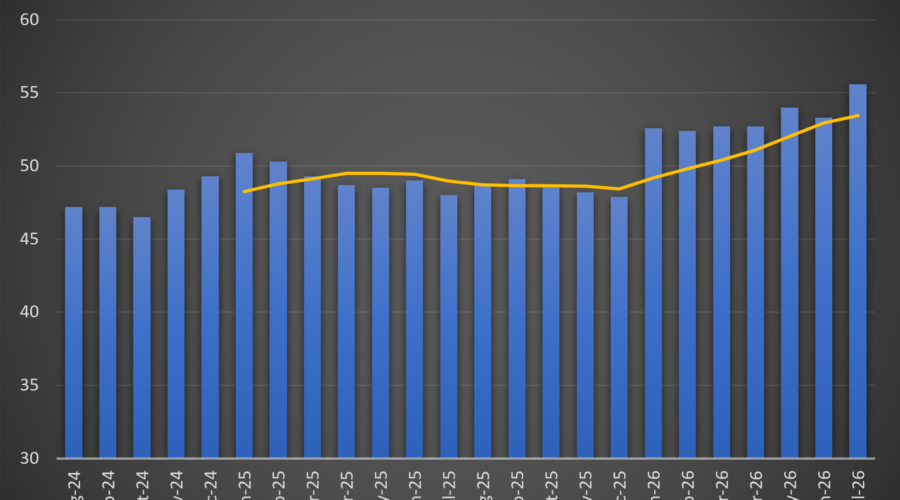
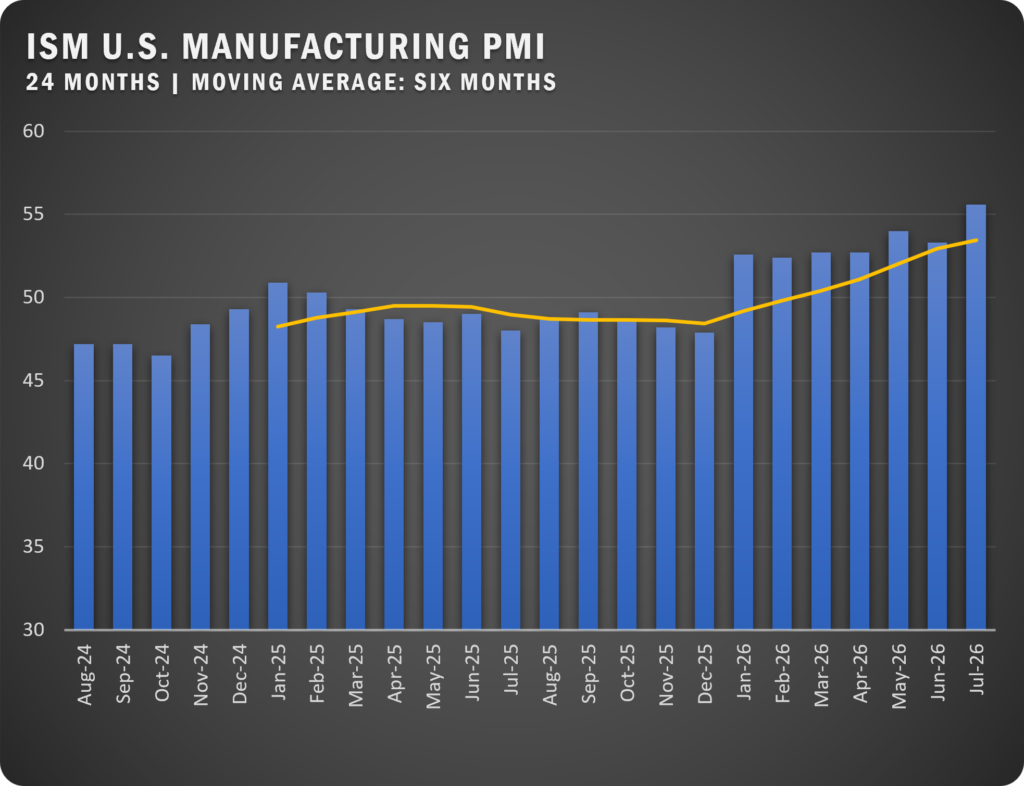
U.S. manufacturing expanded for the seventh consecutive month in July, according to the latest ISM® Manufacturing PMI® Report. Factory activity accelerated to its strongest pace in more than four years as production, hiring and export demand all strengthened, though manufacturers continued to wrestle with pricing volatility, longer lead times and geopolitical uncertainty. The Manufacturing PMI climbed to 55.6 percent in July, up 2.3 percentage points from June and reaching its highest level since May 2022. The broader U.S. economy also remained on solid footing, extending its expansion streak to 21 consecutive months.
Demand remained healthy across the manufacturing sector. The New Orders Index increased to 56.7 percent, marking a seventh straight month of expansion, while the New Export Orders Index returned to growth at 53.0 percent. Backlogs also strengthened, with the Backlog of Orders Index climbing 4.5 percentage points to 55.0 percent, reflecting continued pressure on manufacturing capacity. Customers’ Inventories remained in “too low” territory at 40.7 percent, a condition that typically supports future production activity.
Production continued to lead overall growth. The Production Index surged to 58.5 percent, its highest reading since November 2021 and the ninth consecutive month in expansion. Employment also returned to growth for the first time in 33 months, with the Employment Index rising 3.1 percentage points to 52.8 percent. Sixty percent of survey respondents reported hiring during the month, while the remaining 40 percent continued to focus on managing workforce levels.
Supply chains remained under pressure despite continued expansion. The Supplier Deliveries Index increased to 58.9 percent, marking an eighth straight month of slower deliveries as manufacturers continued to contend with extended lead times. Inventories remained in expansion at 51.2 percent, while Imports accelerated to 55.7 percent as companies continued building supply to support production.
Input costs remained elevated but continued to moderate. The Prices Index declined for the third consecutive month to 71.1 percent, although manufacturers continued to cite pricing volatility as a major concern. More than half of survey respondents referenced unstable pricing, while geopolitical tensions and the renewed Iran conflict continued to disrupt energy markets and global shipping routes.
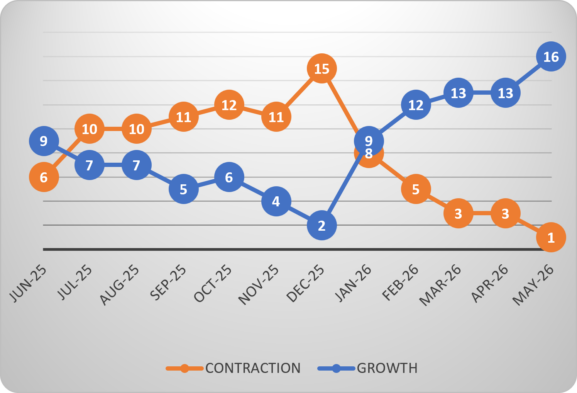
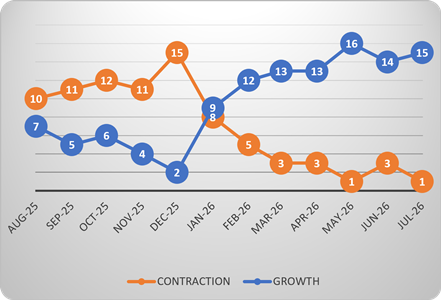
Manufacturing growth broadened in July. Fifteen industries reported expansion while only Chemical Products contracted. Four of the six largest manufacturing industries — Transportation Equipment, Machinery, Computer & Electronic Products and Food, Beverage & Tobacco Products — expanded during the month. Although 20 percent of manufacturing GDP remained in contraction, no portion of the sector registered severe contraction, underscoring the continued strength of the broader manufacturing recovery.
US SECTOR REPORT
ISM Growth Sectors (15): Printing & Related Support Activities; Apparel, Leather & Allied Products; Electrical Equipment, Appliances & Components; Primary Metals; Nonmetallic Mineral Products; Transportation Equipment; Miscellaneous Manufacturing; Textile Mills; Machinery; Computer & Electronic Products; Food, Beverage & Tobacco Products; Paper Products; Plastics & Rubber Products; Furniture & Related Products; and Fabricated Metal Products.
ISM Contraction Sectors (1): Chemical Products.
JULY ISM REPORT COMMENTS
(U.S. Manufacturers)
Chemical Products: “We are seeing a very opportunistic and reactive marketplace. If shortage items become available, we opportunistically buy. Some customers are reducing inventory; others are pulling forward demand. As many customers that are slowing down, an equal number are growing. It looks like a lot of shuffling and shifting market share.”
Machinery: “Now that it seems the buildout of AI infrastructure globally is nearing real activation, products going into data centers are at full procurement and manufacturing ramp-up. Thus, demand for our semiconductor end products and connectivity (power, networking and photonics) is booming. Similarly, defense is at an all-time high, with most of our product orders going to these two industries. Order volumes for medical, industrial and consumer products are markedly lower.”
Computer & Electronic Products: “We continue to operate in a favorable demand environment driven by growth in the semiconductor, AI, advanced packaging and high-performance computing markets. Recent company reports indicate strong sales growth and continued investment in manufacturing capacity, technology and customer support capabilities. This scenario supports a positive business outlook and creates opportunities to leverage increased purchasing scale across the enterprise.”
Transportation Equipment: “Aerospace and defense demand continues to be strong and growing, based on business backlogs. Competing for scarce supply — electronics, certain critical minerals and other categories — is challenging on-time fulfillment for our supply chains. This is expected to get worse with co-dependent sectors also remaining strong and restocking challenges for automotive electronics.”
Primary Metals: “No normalcy in sight in the world of metals. It makes me yearn for the coronavirus pandemic chaos, which was more manageable than whatever this is that we are in. At least business is better; however, the components of good business are not. Sharp pricing downturns in aluminum will make things more interesting, as supply levels will prevent those decreases from taking hold across the board. Getting customers to understand that is not always easy.”
Transportation Equipment: “Continued tariffs on products utilized in our product lines are being monitored by the business, which is working to mitigate or limit tariff risk. Geopolitical risk, especially in the Middle East, pertaining to commodity and energy markets remains a concern. There has been some increased cost and transit time for rerouted shipments due to conflicts in the Red Sea, Strait of Hormuz and Suez Canal.”
Fabricated Metal Products: “Business is still solid; we will increase revenue by 3 percent to 5 percent. We are considering foreign steel purchases for early next year because domestic steel mills are getting greedy.”
Paper Products: “Our customers in Asia continue to procure elsewhere to avoid paying a tariff. While the Iran war was paused, it was terrific to see fuel prices (and delivery costs) falling steadily. Now that skirmishes have resumed, we expect fuel to rise again.”
Chemical Products: “Definitely a downturn within several of our business units, mainly the consumer products division. High freight costs, both for truck and ocean, and longer lead times are concerning. Pricing was moving downward until the Iran war started again.”
Electrical Equipment, Appliances & Components: “The pricing volatility and lead-time extensions in this market are arguably worse than the pandemic era. During COVID-19, we saw a surge of price hikes and inventory buy-ups, which caused constraints that eventually leveled out. We are seeing nothing but consistent upward trends for both pricing and lead times that show no signs of slowing down. Specifically, 5-percent to 25-percent price increases for printed circuit board assembly components and 15-percent to 45-percent increases for bare boards are negatively impacting customer demand outlook into next year. This isn’t sustainable.”
GLOBAL PMI NOTES
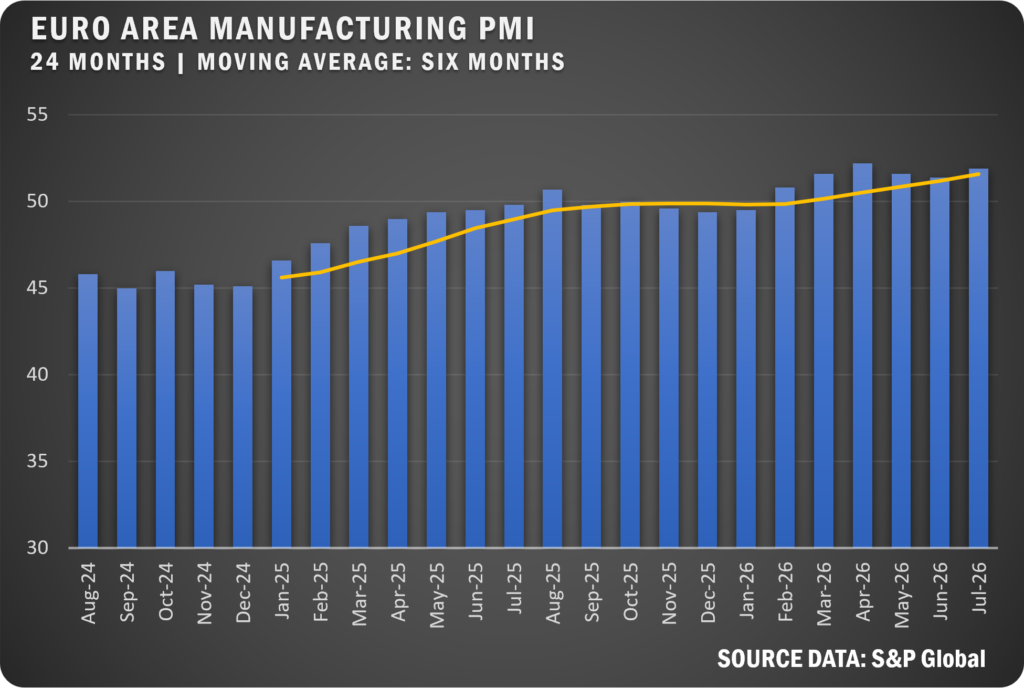
EUROZONE: The Eurozone manufacturing PMI climbed to 51.9 percent in July, marking the strongest factory conditions since April as production posted its fastest growth in more than four years. Demand remained uneven, however, with only modest gains in new orders and continued export weakness, while easing cost pressures and improving confidence were offset by ongoing job cuts and shrinking backlogs.
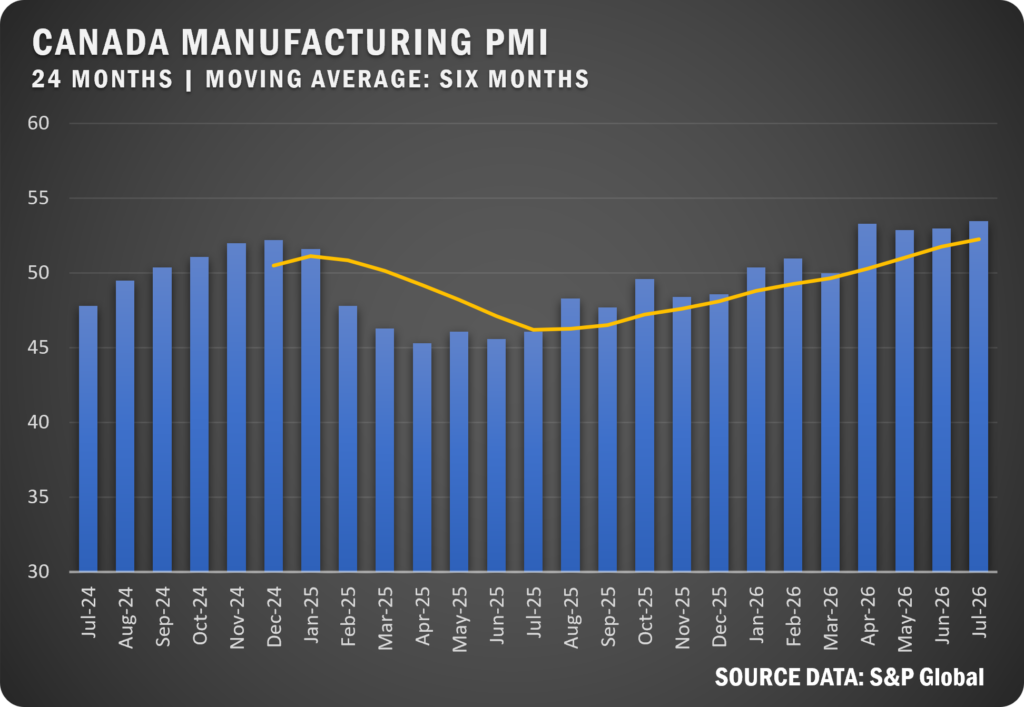
CANADA: Canada’s manufacturing PMI rose to 53.5 percent in July, its strongest reading in more than four years, driven by higher output and improving domestic demand. Rising costs, supply shortages and geopolitical uncertainty continued to weigh on confidence, even as companies expanded hiring and increased production.
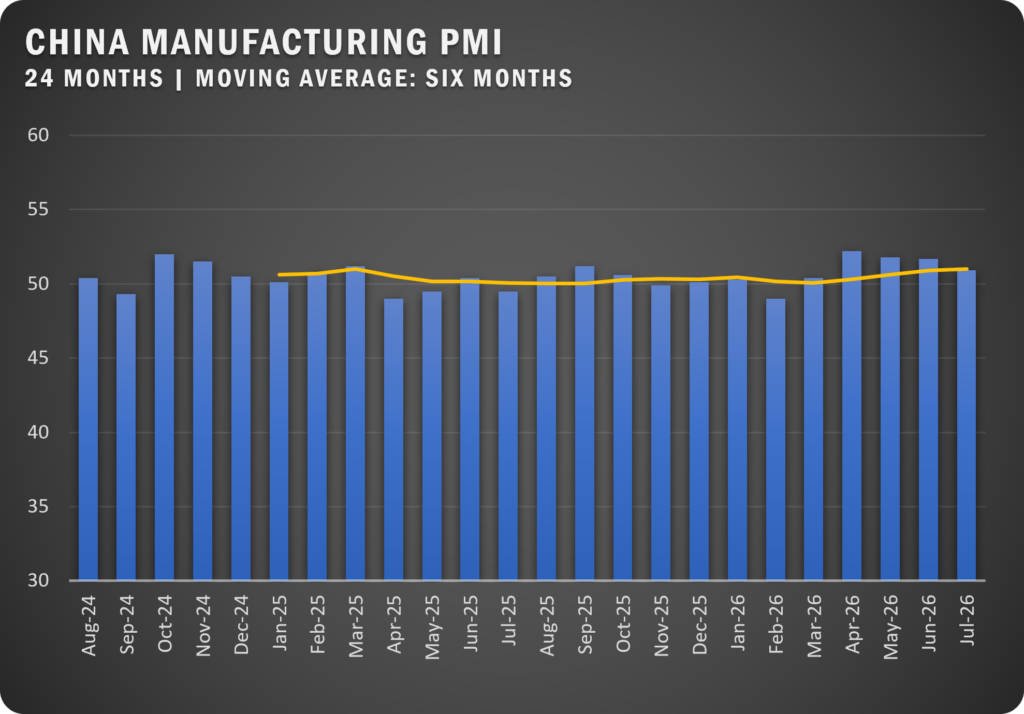
CHINA: China’s manufacturing expansion moderated in July, with the PMI easing to 50.9 percent as output and new orders grew at a slower pace. Employment strengthened, and export demand improved, while easing input cost inflation and stable selling prices supported a more optimistic outlook.
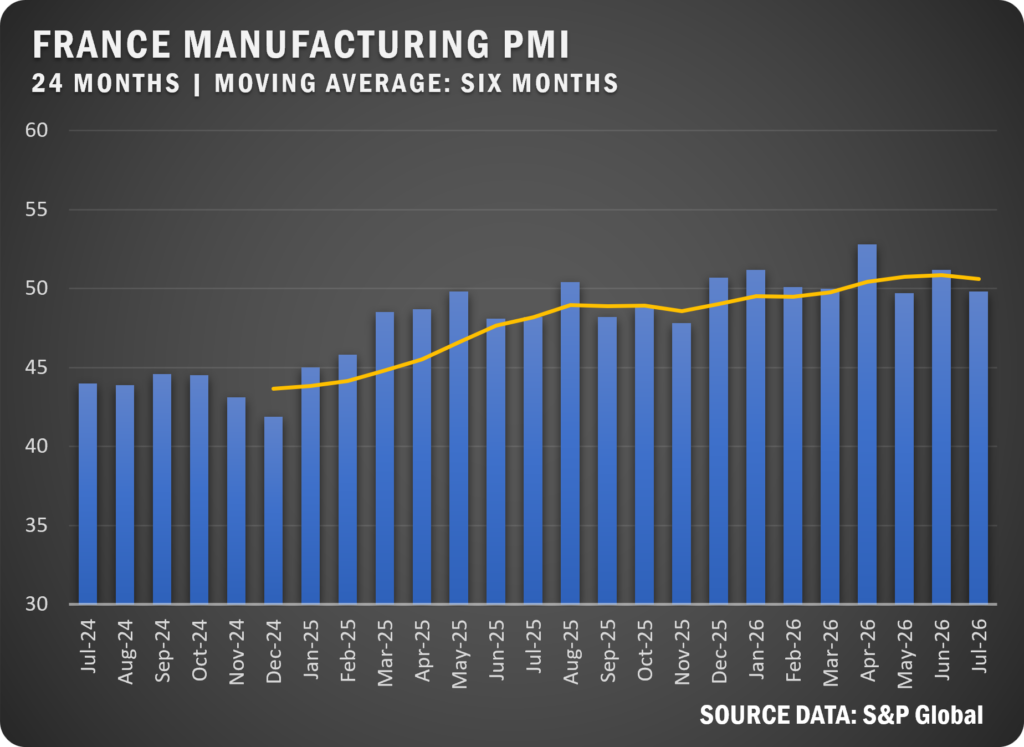
FRANCE: France’s manufacturing sector slipped back into contraction in July with a reading of 49.8 percent, with weaker demand driving declines in production, new orders and exports. Supply chain disruptions persisted, but moderating cost pressures and improved business confidence suggested manufacturers remain cautiously optimistic about the year ahead.
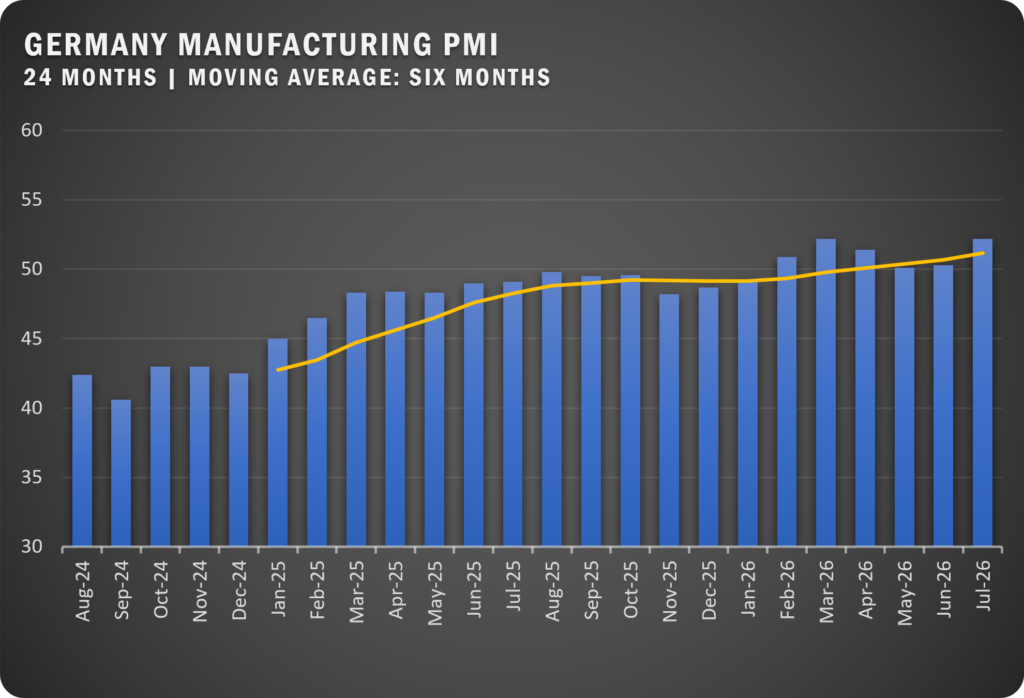
GERMANY: Germany’s manufacturing PMI advanced to 52.2 percent in July, reaching a four-month high as stronger exports fueled the fastest production growth in nearly four-and-a-half years. Easing cost inflation provided additional support, although supply chain bottlenecks and subdued business confidence remained ongoing concerns.
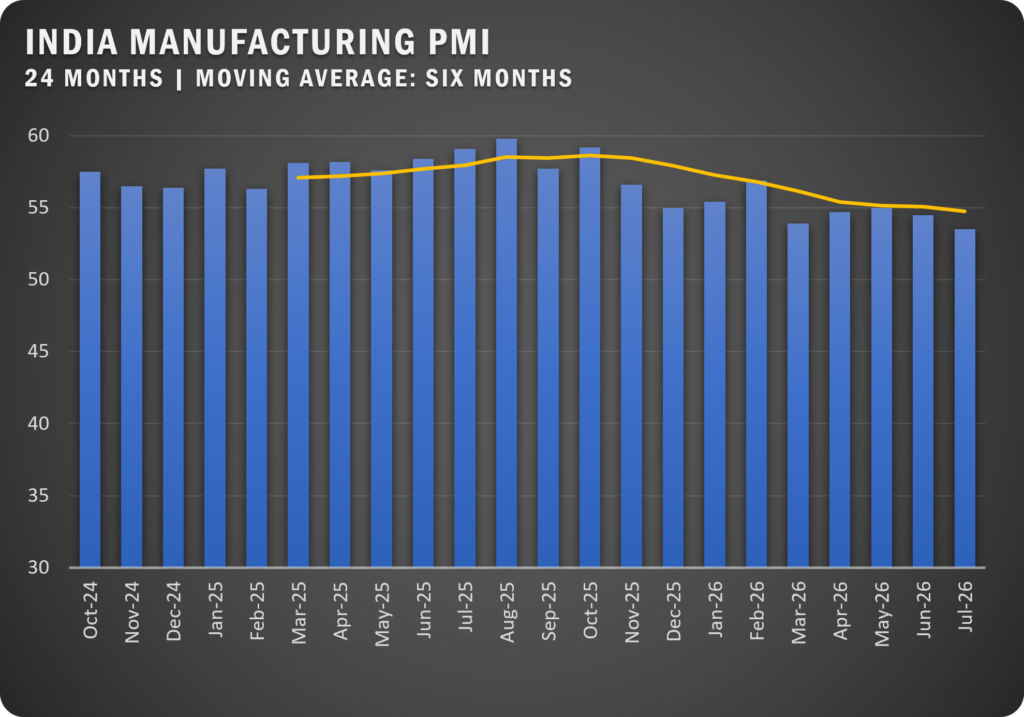
INDIA: India’s manufacturing PMI eased to 53.5 percent in July, marking the slowest pace of expansion since 2021 as domestic demand softened. Export orders remained strong, supply chains improved significantly and manufacturers regained confidence on expectations of stronger infrastructure spending and future demand.
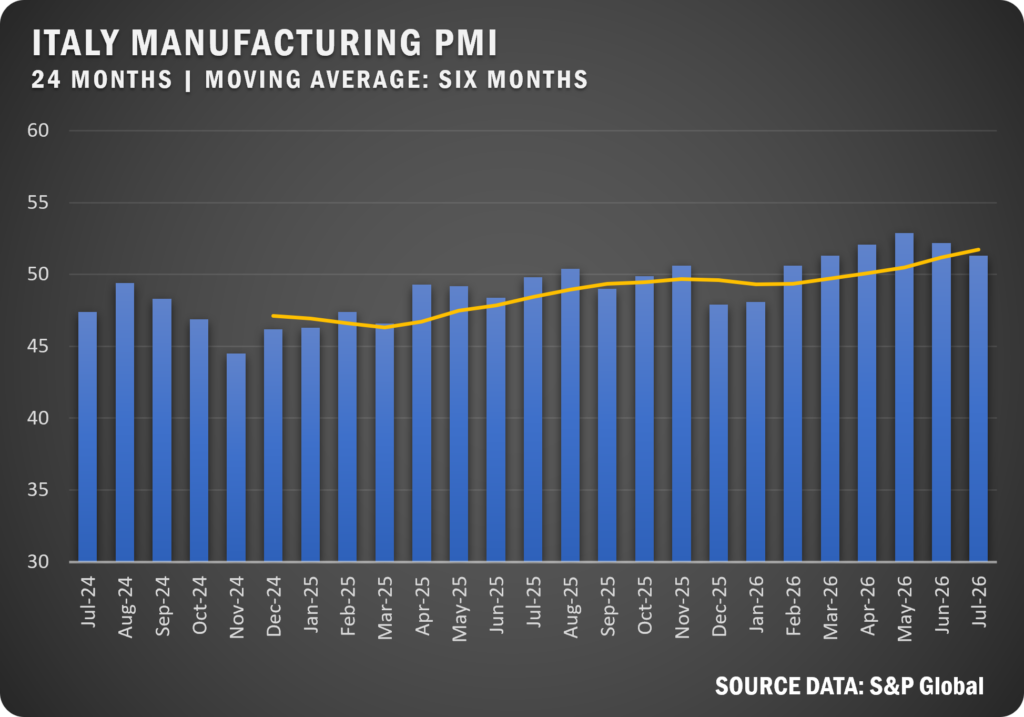
ITALY: Italy’s manufacturing PMI moderated to 51.3 percent in July as demand softened and export orders declined for the first time in five months. Production continued to expand, but easing cost pressures were accompanied by weakening employment, purchasing activity and business confidence.
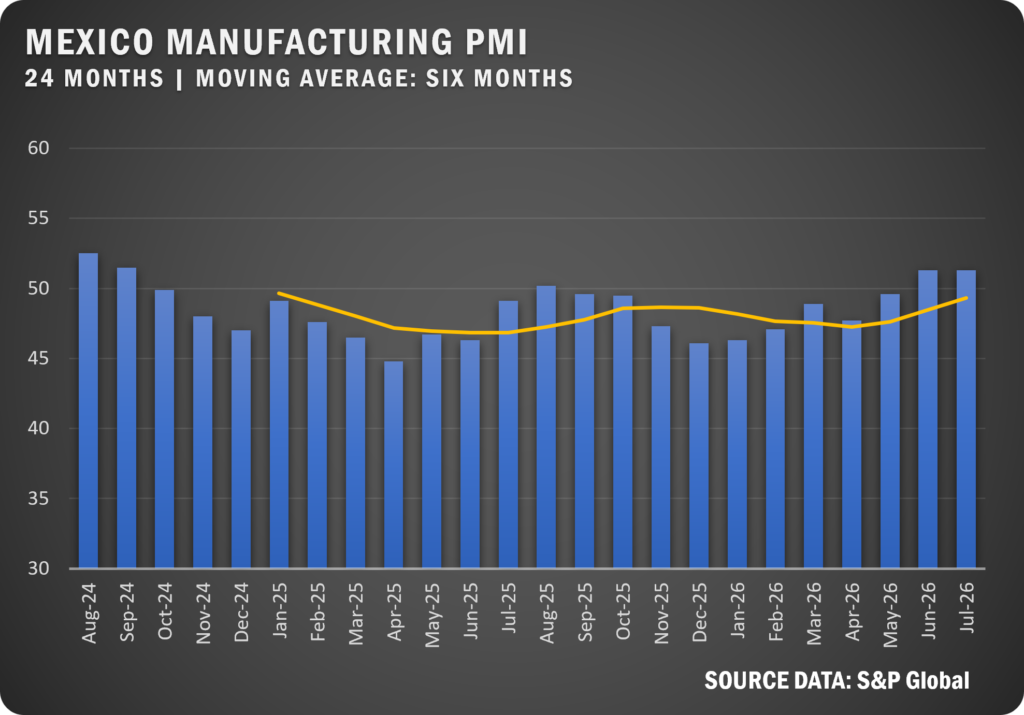
MEXICO: Mexico’s manufacturing PMI held steady at 51.3 percent in July, marking a second consecutive month of expansion as domestic demand strengthened. Export orders and factory output remained weak, however, while elevated costs, supply chain disruptions and geopolitical uncertainty continued to temper business confidence.
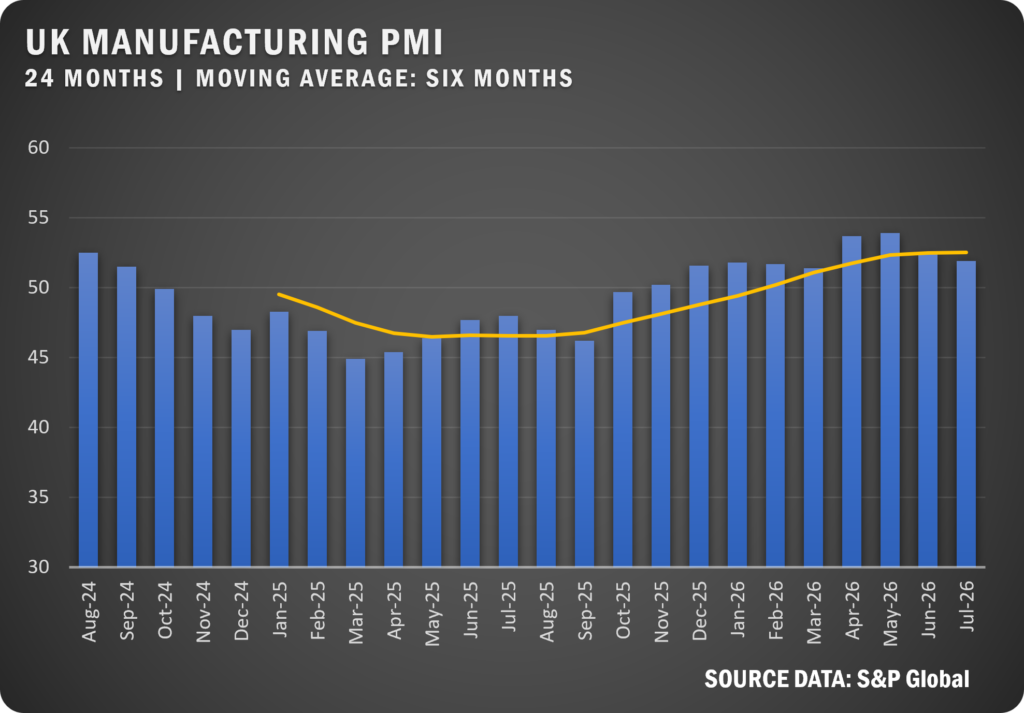
UNITED KINGDOM: The UK manufacturing PMI eased to 51.9 percent in July but remained in expansion territory for a ninth consecutive month. Output and new orders continued to grow, while moderating inflation and improving supply chains were offset by softer business confidence and cautious hiring.
Source: Institute for Supply Management®, PMI® (Purchasing Manager Index), Report On Business®. For more information, visit the ISM® website at www.ismworld.org.